
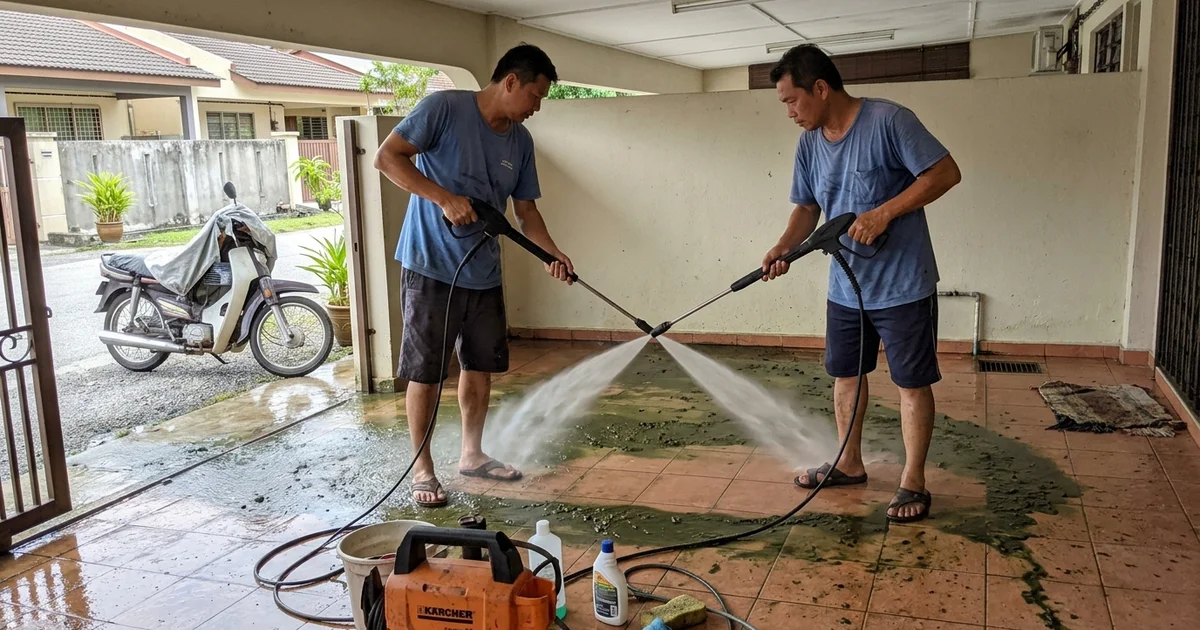
Why Perak Porches Go Green
Algae and moss need three conditions: moisture, shade and a surface with enough texture to hold onto. Ipoh supplies all three for most of the year.
Humidity keeps outdoor surfaces damp long after the rain has stopped. Car porches are roofed or shaded by the house, so direct sun never dries them out or burns off the growth. And textured surfaces — interlocking pavers, brushed cement, unglazed tile — hold water in their pores and joints, which is exactly where spores settle.
That’s why the greenest part of a driveway is almost always nearest the wall or under a tree, while the open middle stays comparatively clear. It isn’t about dirt. It’s about how long the surface stays wet.
The Risk People Underestimate
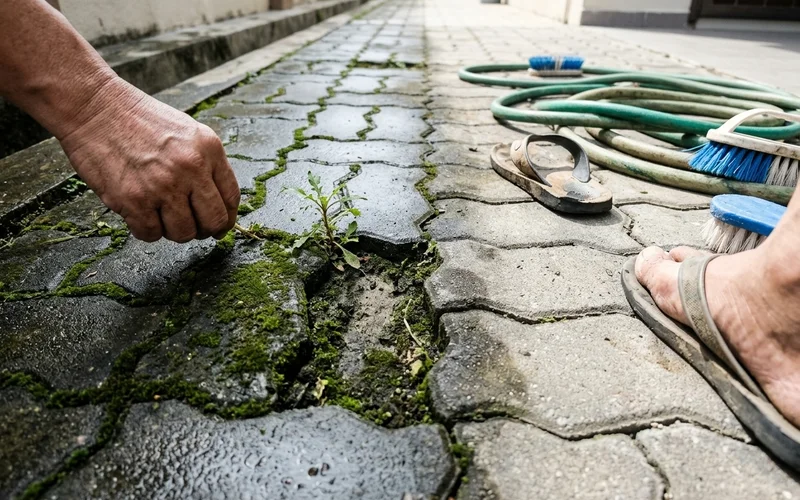
Most people book a pressure washing job because the porch looks bad. The better reason is that it’s slippery.
Wet algae forms a thin film on a hard surface with almost no grip. It gives no warning underfoot, and the people most at risk are the ones carrying shopping from the car or walking out in the rain. In households with older family members, this is worth treating as a safety job rather than a cosmetic one.
There’s a slower problem too. Moss holds moisture against whatever it grows on. In paver joints it works into the sand and loosens the bedding over time. On rendered perimeter walls it keeps the render permanently damp, which shortens its life.
Why Brushing Doesn’t Hold
By the time algae is a solid green film, it has grown into the texture of the surface rather than sitting on top of it.
A stiff brush removes the top layer. The surface looks better for a fortnight, then it comes straight back from the growth still living in the pores and joints. That cycle is why people end up scrubbing the same porch four times a year and concluding nothing works.
Pressure washing works differently. Water at roughly 120 to 150 bar flushes the growth out of the texture instead of shaving it flat, and on open driveways a rotary surface cleaner covers the area evenly rather than leaving stripes.
The Step That Makes It Last
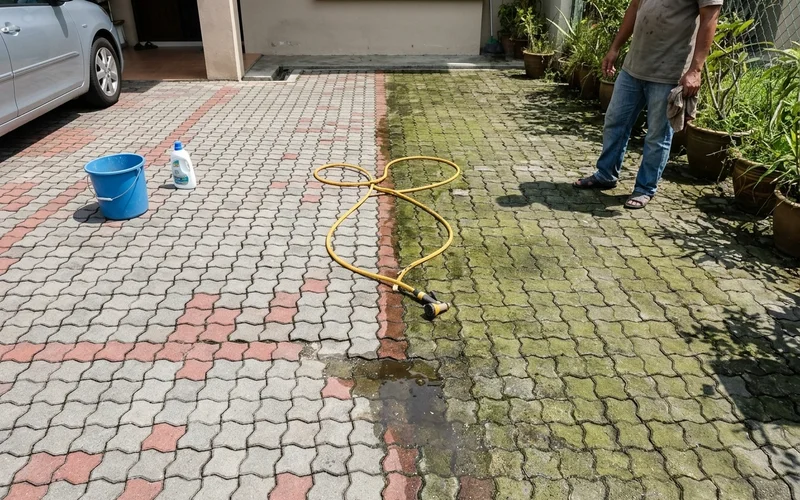
Washing alone resets the surface. What changes how long the result holds is the treatment afterwards.
Shaded areas get an algae biocide treatment once the surface is clean. It kills the residual growth left deep in the pores, so regrowth starts from zero rather than from halfway. In practice that’s often the difference between three months and a year.
When to book it
Before the heavy monsoon rain, not during it. A washed surface that gets a few dry hours afterwards holds the treatment better, and you get a safe porch for the whole wet season rather than the tail end of it.
Simple Prevention Between Washes
- Trim back overhanging branches to let more light onto the surface
- Keep drains and outlets clear so water doesn’t pool
- Hose down the shaded strip occasionally rather than letting growth establish
- Don’t leave mats, planters or bags of soil sitting on the porch permanently — the damp patch underneath becomes the starting point
None of this removes the need for an annual wash in Perak’s climate. It does stretch the interval, which is usually worth a few minutes of gardening. For what the actual washing process involves, see our guide to pressure washing driveways, patios and walls.
Which Surfaces Suffer Most in Ipoh
Not every outdoor surface goes green at the same rate, and knowing which ones need attention first helps you plan a single visit rather than three.
Interlocking pavers are the worst offenders. The joints hold sand and moisture, which is ideal for moss, and the texture of each paver gives algae plenty to grip.
Brushed or textured cement comes next. The pattern that makes it non-slip when clean is exactly what holds growth when it isn’t.
Unglazed outdoor tile greens steadily in shaded spots but cleans up well, since the growth sits shallower than on cement.
Rendered perimeter walls collect vertical streaking, usually worst below a leaking gutter or where rain splashes back off the ground.
Polished or glazed tile resists growth best, but becomes the most dangerous when it does go green, because there’s no texture to provide grip.
The practical takeaway: if you have interlocking pavers on a shaded side, that’s where the annual wash pays for itself. A glazed porch may look fine for longer and still be the one someone slips on.